H O M E
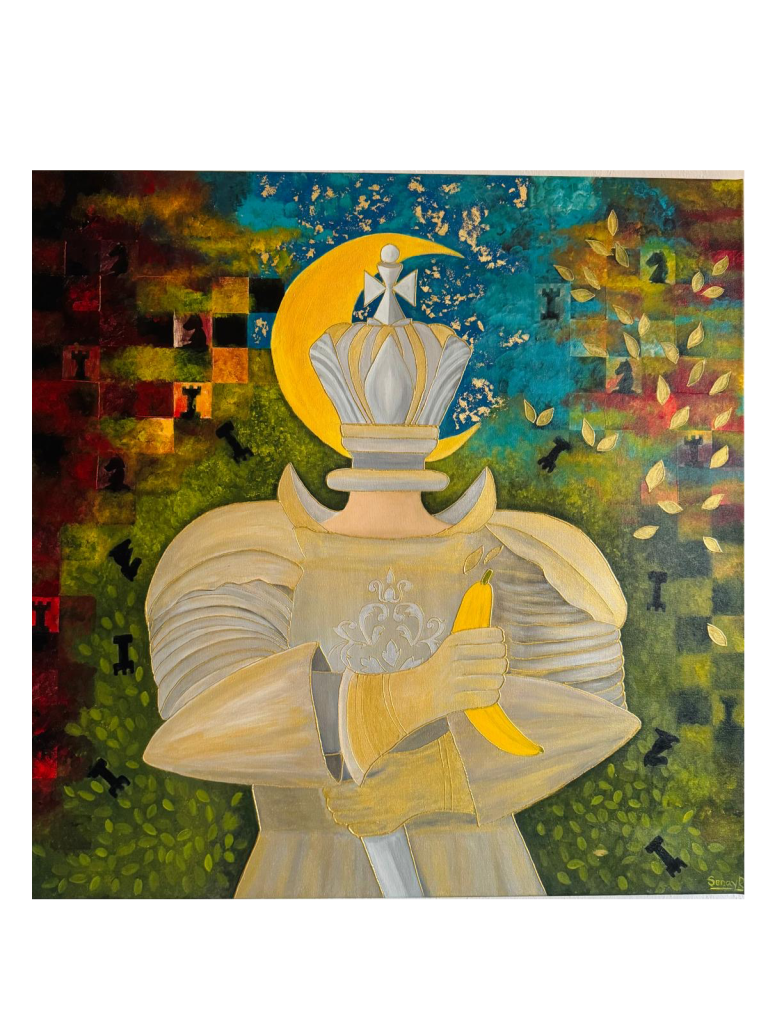
“The King” – An Ironic Portrait of Power
Senay Ramada
In the painting “The King”, Senay Ramada constructs a highly symbolic and ironic image of power, stripped of a concrete face and individual identity. The central figure is a faceless king—an archetype rather than a person. Power here is presented as a role, a function, a mask that can be worn by anyone, yet one that inevitably erases individuality.
The hands of the figure, clearly emphasized with five distinct fingers, are a key compositional element. The number five points toward the human and the earthly—the five senses through which we perceive and control the world, but also the five fundamental instruments of power: control, fear, temptation, force, and possession. The gesture is not threatening but possessive—the hand grips, guards, and claims.
The most striking ironic accent in the painting is the banana held by the king. Instead of a scepter, a sword, or a symbol of statehood, power is represented through a banal, everyday object. The banana functions as a metaphor for primal instinct, corporeality, and primitive desire. In this way, the artist exposes the falseness of grandeur—behind the gilded façade often lies nothing more than basic instinct.
The background, filled with scattered chess pieces, alludes to the game of power, strategy, and manipulation. Yet the pieces are tilted and chaotic—the order is destabilized, the rules are relative. The king is not the master of the game but merely a part of it.
The golden halo behind the head recalls the sacralization of power—the attempt to present it as divine or untouchable. Within the context of the faceless figure and the ironic symbol of the banana, the halo takes on a sarcastic tone, emphasizing the contrast between appearance and essence.
“The King” is not a glorification of power but its unmasking. Senay Ramada reveals how easily grandeur can turn into caricature, and how behind the crown there is often not wisdom, but human weakness.
 Senay Ramada