H O M E
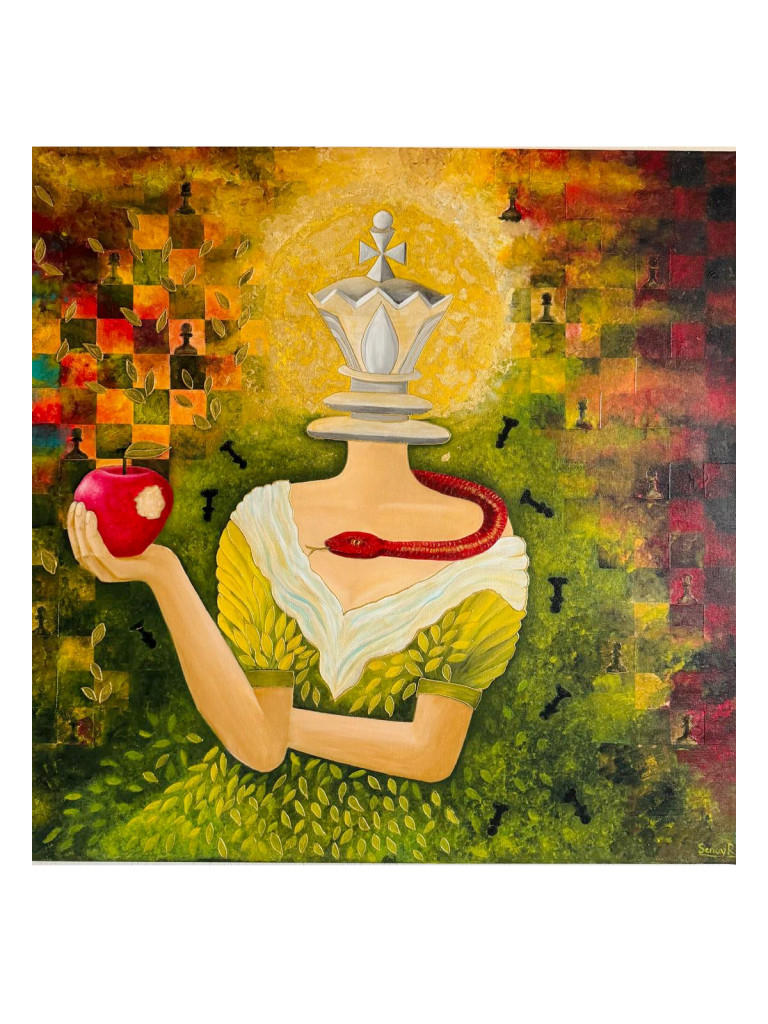
In the painting “The Queen”, Senay Ramada constructs a multilayered symbolic image of female power, temptation, and knowledge. As in “The King”, the figure is faceless, transforming her from a specific individual into an archetype – an image of a role, an idea, and a state of being.
The apple is one of the most recognizable symbols in the history of art. It refers to the biblical story of knowledge, choice, and temptation. In the Queen’s hand, the apple is not merely a symbol of sin, but an act of awareness – a sign of free will and the price of knowledge. The bitten part suggests that the choice has already been made and there is no turning back.
The snake passing through the body reinforces this idea. It is simultaneously a symbol of temptation, transformation, and wisdom. Rather than an external threat, the snake here is part of the Queen herself – an inner voice, an instinct, a form of knowledge that cannot be separated from one’s identity.
The leaves woven into the dress and the background carry a dual meaning. On one hand, they evoke nature, life, and growth. On the other, they suggest concealment and protection after the loss of innocence. The green palette creates a sense of vitality, but also of entrapment – a paradise that is no longer innocent.
The chess pieces in the background once again point to the theme of power as a game, strategy, and a balance between movement and sacrifice. The Queen, the most powerful piece in chess, does not dominate aggressively here, but exists consciously – as a bearer of choice and consequences.
“The Queen” by Senay Ramada is not an image of submission, but of inner strength. It is a portrait of woman as a bearer of knowledge, transformation, and responsibility – a figure unafraid of the complexity of her own nature.
 Senay Ramada